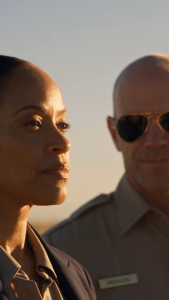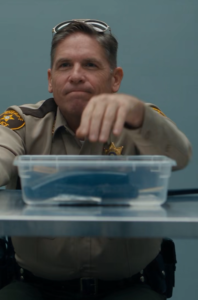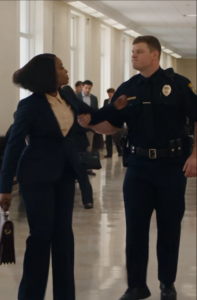
The Sheriff Thought He Was Teaching a Quiet Black Woman a Lesson—Then Two Military Helicopters Descended on His Jail Before Sunset
Part I — The Stop
Sheriff Boyd Cleary knew the silver Chevrolet was legal before he ever turned on his lights.
That was the part he would later try hardest to forget.
The afternoon heat over Oak Haven shimmered above Interstate 89, flattening the horizon into wavering bands of asphalt, pine, and washed-out sky. Boyd sat in his cruiser behind a weather-beaten billboard advertising a motel that had closed three summers ago. His radar gun rested against the steering wheel.
Forty-four.
The speed limit had dropped from sixty-five to forty-five just before the town boundary. The Chevrolet Malibu had slowed before reaching the sign.
No violation.
Boyd watched it pass anyway.
Washington, D.C., rental plates. One driver. Black woman. Alone.
He lowered the radar gun.
There were drivers who came through Oak Haven tense and apologetic, already reaching for their wallets before he reached their windows. There were others who arrived with out-of-state confidence, the kind Boyd interpreted as disrespect before a word was spoken.
The woman in the Malibu had committed a smaller offense.
She had looked composed.
Boyd started the cruiser.
His lights came alive in the rearview mirror of the Chevrolet.
Inside the rental car, Brigadier General Sarah Hayes saw them and felt no surprise.
She checked the speedometer.
Lane position centered.
Turn signal.
Shoulder.
Park.
Engine off.
Window down.
Hands at ten and two.
She did each movement slowly, visibly, exactly as her father had taught her when she was sixteen and first learning to drive.
Calm doesn’t guarantee safety, he had told her.
She could still hear his voice after all these years.
But don’t ever give a stranger an excuse to describe you as something you weren’t.
Sarah had spent the previous four days in secure meetings where colonels waited outside locked doors and senior officials surrendered their phones before entering. She had briefed commanders who controlled assets scattered across continents. She had missed sleep, eaten two dinners from paper containers, and changed her flight once already.
All she wanted now was to reach the airport.
In the mirror, she watched the sheriff leave his cruiser.
Heavy steps. Mirrored sunglasses. Tan uniform stretched tight across a broad torso. His thumbs hooked beside his gun belt.
He stopped at her window.
“License and registration.”
Sarah looked straight ahead.
“My wallet is in my purse on the passenger seat. The rental agreement is in the glove compartment. May I reach for them?”
The sheriff’s mouth shifted slightly.
“Go ahead.”
She took out the documents and handed them over.
He studied the license longer than necessary.
“Sarah Hayes.”
He made her name sound like a question he had already decided she was answering incorrectly.
“Long way from D.C.”
“I’m on my way to the airport, Sheriff.”
“I didn’t ask where you were going.”
Sarah turned her head toward him.
There it was.
Not confusion.
Not caution.
A test.
She knew the type. Rank produced them. Bureaucracy produced them. Institutions produced them. So did tiny rooms where one person possessed authority and wanted everyone else to feel it.
She had met versions of Boyd Cleary wearing expensive suits, combat uniforms, and congressional visitor badges.
The difference here was that Boyd had a gun and no one standing behind him.
He glanced toward the highway.
“You know why I stopped you?”
“No.”
“You crossed the center line back there.”
Sarah paused.
“No, Sheriff. I did not.”
His chin lifted.
“You calling me a liar?”
“I’m telling you what occurred.”
“You were weaving.”
“I was not.”
“You know how fast you were going?”
“Forty-four miles per hour after the posted reduction to forty-five.”
That answer irritated him more than denial would have.
Boyd bent lower toward the window.
“You’ve got a lot of attitude for somebody driving through my jurisdiction.”
Sarah’s face remained still.
“I am calm. I am asking whether you intend to issue a citation or detain me.”
The word detain changed something.
It made the encounter formal.
It reduced Boyd’s authority from something personal and theatrical into something that could be measured later.
His lips compressed.
“Step out of the vehicle.”
Sarah held his gaze for half a second.
“For a traffic violation?”
“Step out.”
She could have asked more questions.
She could have identified herself.
She could have reached into the legal vocabulary that had been drilled into officers and commanders for decades.
Instead, she unbuckled her seat belt.
“Understood.”
She stepped into the heat.
The highway shoulder radiated upward through the soles of her shoes. A truck passed, pushing hot air against them.
Boyd pointed at the car.
“Turn around. Hands on the roof.”
Sarah did not move immediately.
“Sheriff Cleary, I strongly suggest you reconsider what you are about to do.”
He stepped closer.
“Are you threatening me?”
“Sure sounded like one.”
“I am providing you with a factual assessment.”
His expression hardened.
There were moments in Sarah’s military career when she had recognized an irreversible decision before the person making it did.
A commander dismissing intelligence because retreat would embarrass him.
An officer hiding a logistical failure because admitting it might damage promotion prospects.
A junior soldier lying because fear felt easier than consequence.
This was the same thing in smaller clothes.
Boyd reached for her arm.
“Turn around.”
Sarah turned.
He pulled her right wrist behind her back.
Metal closed around it.
Then the left.
Too tight.
She flexed her fingers once.
“Resisting arrest,” Boyd said. “Disorderly conduct. Failure to comply.”
Sarah looked sideways.
“I complied with every instruction.”
He gave the cuffs an unnecessary tug.
“We’ll call it the attitude package.”
For the first time, something changed in her face.
Not fear.
Not anger.
Recognition.
She looked at him the way she looked at a damaged bridge on a planning map.
Something had failed.
Now the question was how far the failure extended.
“Very well, Sheriff.”
That calm response unsettled him.
He pushed her toward the cruiser.
“You’ll figure it out.”
Sarah said nothing.
As he opened the rear door, she glanced once toward the rented Malibu.
Her secure communications device remained inside the inner pocket of her travel jacket.
She had considered identifying herself before being handcuffed.
She had decided against it.
That decision was no accident.
Her father had once told her that power revealed people twice—first when they believed they had none, and again when they believed they had all of it.
Sarah already knew who Boyd Cleary was when confronted by resistance.
Now she wanted to know who he was when he believed there would be no resistance at all.
The cruiser door slammed.
Boyd walked back toward her rental car.
From behind the glass, Sarah watched him search it.
He had not asked permission.
He opened the glove compartment, then the center console. He lifted her purse, rifled through it, and examined the back seat.
When he returned, he carried her jacket.
He opened the rear door.
“What’s this?”
In his hand was a matte-black device roughly the size of a thick smartphone.
No logo.
No conventional keypad.
A recessed biometric seal crossed its side.
Sarah’s eyes moved from the device to Boyd.
“It is secure government communications equipment.”
He smirked.
“Sure it is.”
“I strongly advise you not to attempt to access, damage, or interfere with it.”
“You advising me again?”
“Yes.”
Boyd dropped the device onto the passenger seat beside him.
Sarah leaned back.
There would be a record now.
Not merely of the arrest.
Of the seizure.
And because the device was built precisely for the possibility that somebody unauthorized might take it, there would already be another record somewhere very far from Oak Haven.
Boyd drove toward town.
Sarah watched the highway disappear behind them.
She had a flight she would no longer make.
She had a classified briefing scheduled for the following morning.
She had an encrypted device outside her control.
Those were problems.
Boyd Cleary was still only beginning to understand that he had one too.
Oak Haven’s sheriff’s department occupied a low brick building beside the county administrative offices. The flag above the entrance hung limp in the heat.
Boyd led Sarah inside by the arm.
Deputy Toby Miller looked up from behind the booking desk.
He was younger than Boyd by almost twenty years, narrow-faced and soft-spoken, with the cautious posture of a man who had learned to keep his opinions from entering rooms before he did.
His eyes moved to Sarah’s cuffs.
Then to Boyd.
“What happened?”
“Traffic stop turned into an attitude problem.”
Toby’s gaze lingered on her wrists.
The skin beneath the cuffs was beginning to redden.
“Want me to book her?”
“I’ll do it.”
Boyd sounded pleased with himself.
He guided Sarah to the counter.
“Empty your pockets.”
Sarah did.
Wallet.
Lip balm.
Rental keys.
A folded airport itinerary.
Then the black device.
Boyd placed each item into a gray plastic evidence tray.
Toby picked up the secure device carefully.
“What is this?”
“Fancy burner phone,” Boyd said.
Sarah looked at Toby.
“It is United States government property containing protected communications systems.”
Toby froze.
Boyd barked a short laugh.
“You hear that? Protected communications systems.”
He took the device from Toby and turned it over.
There were no manufacturer markings.
That should have bothered him.
Instead it amused him.
“Who are you supposed to be?”
Sarah looked at him.
“My identification is in your possession.”
“Your driver’s license says Sarah Hayes.”
“That is correct.”
“No occupation listed.”
“Driver’s licenses generally do not list occupations.”
Toby looked down to hide the beginning of a reaction.
Boyd noticed.
“You find something funny?”
“No, Sheriff.”
Boyd tossed the black device into the tray.
The impact made Toby wince.
Sarah’s voice remained measured.
“Do not do that again.”
Boyd leaned over the desk.
“You’re in my jail now.”
“That does not alter ownership of the device.”
“I’m getting tired of your tone.”
“I haven’t changed it.”
Toby looked between them.
That answer produced no satisfaction in Sarah. No sarcasm. That was what made it worse.
Boyd could fight anger.
He understood anger.
Sarah was giving him facts.
He hated facts he could not bully.
“Take her prints,” he told Toby.
Sarah was photographed, fingerprinted, searched, and processed under charges Boyd wrote himself.
Disorderly conduct.
Failure to comply.
Resisting arrest.
He hesitated above the incident report, then added unsafe lane movement.
Toby saw it.
His forehead tightened.
“You got dash footage?”
Boyd looked up.
“What?”
“For the lane violation.”
“You doing traffic review now?”
“No. Just asking.”
“Then stop.”
Toby nodded.
Sarah watched him.
Not ally, she decided.
Not yet.
But not comfortable either.
Sometimes that mattered.
Boyd led her to a small holding cell at the end of the corridor.
Concrete bench.
Stainless steel toilet.
Scratched paint.
A camera in the corner.
He opened the door.
Sarah stepped inside.
The cuffs came off.
She rotated her wrists.
Boyd remained at the threshold.
“Maybe a couple hours in here will help your attitude.”
Sarah sat on the bench.
“You should preserve your dash-camera recording.”
Boyd’s smile disappeared.
“The recording of the stop. Preserve it.”
“You planning to tell me how to do my job?”
“No. I’m preventing you from later claiming you were unaware it mattered.”
Toby had followed them down the hall.
He stared at Sarah.
Something in her phrasing had changed the atmosphere.
Not a threat.
A deposition.
Boyd slammed the cell door.
“Enjoy your stay.”
He walked away.
Toby remained half a second longer.
“Deputy Miller.”
He stopped.
She had read his name tag once.
“Ma’am?”
“Please ensure the property log accurately reflects the secure communications device.”
Toby glanced toward Boyd’s retreating back.
“I’ll make sure everything’s listed.”
“Thank you.”
Sarah sat quietly.
Toby walked away.
Thirty minutes later, she asked for a telephone call.
Part II — The Red Phone
Boyd made her wait another eleven minutes.
Sarah knew because a wall clock hung directly across from the cell.
At 4:17 p.m., Toby returned.
“Sheriff says you can make your call.”
Sarah stood.
Boyd was sitting behind the booking counter drinking coffee when Toby brought her out.
“Calling your attorney or your mama?”
Sarah ignored him.
Toby set an old wired telephone on the counter.
“Local or long distance?”
“Long distance.”
Boyd smiled.
“Hope they accept collect calls.”
Sarah lifted the receiver.
Then she dialed twelve digits from memory.
Toby noticed.
Boyd did not.
The line clicked.
A neutral synthetic voice answered.
“Authentication required.”
Boyd slowly lowered his coffee cup.
Sarah’s posture changed.
The transformation was subtle but immediate.
At the roadside she had been a detained motorist.
In the holding cell she had been a prisoner documenting procedure.
Now her shoulders squared as if she had entered a command post.
“Echo Seven Tango Niner,” she said. “Authorization code Black Sky Four. Priority Flash.”
Toby stopped breathing for a moment.
The synthetic voice disappeared.
A human voice replaced it.
“National Military Command Center. Go ahead.”
Boyd stared.
Sarah’s tone became clean and precise.
“This is Brigadier General Sarah Hayes, United States Army. My encrypted communications device has been confiscated. I am presently being detained inside an unsecured local law-enforcement facility without lawful cause. Trace my device, notify General Thomas Reed, and initiate extraction protocol.”
Silence on the line.
Then:
“Confirm status, General.”
“Uninjured. Restrained during arrest. Device handled by unauthorized personnel. Facility designation Oak Haven Sheriff’s Department. Sheriff Boyd Cleary detaining officer.”
Boyd stepped toward her.
“That’s enough.”
Sarah raised one finger without looking at him.
Boyd actually stopped.
The person on the other end asked another question.
Sarah answered.
“Unknown compromise. Treat device as exposed pending inspection.”
Another pause.
Sarah’s gaze moved to the evidence tray behind Boyd.
“Also preserve local digital and video records immediately. There may be evidence integrity concerns.”
Boyd snatched the receiver from her hand.
“Call’s over.”
He slammed it down.
For several seconds nobody spoke.
Then Boyd laughed.
Too loudly.
“What was that?”
“My phone call.”
“You expect me to believe you’re a general?”
“I did not ask you to believe anything.”
Toby stared at the black device.
“Oh, come on.”
He jabbed a finger toward Sarah.
“She’s playing you.”
Toby said nothing.
Boyd turned to Sarah.
“Brigadier General, huh?”
“Where’s the uniform?”
“I was traveling.”
“Where’s the military ID?”
“In my wallet.”
Boyd’s head snapped toward the evidence tray.
He opened the wallet.
He had looked through it earlier.
He had seen credit cards, driver’s license, airport credentials.
Now he inspected every sleeve.
Behind the driver’s license was a federal identification card he had not bothered to examine.
He pulled it out.
His smile weakened.
Toby stepped closer.
The card carried Sarah’s photograph.
United States Department of Defense.
Military identification.
Name: HAYES, SARAH E.
Rank: BG.
Boyd stared at the letters.
“Could be fake.”
Toby looked at him.
“Sheriff—”
“I said it could be fake.”
Sarah folded her hands.
“You are free to verify it.”
“I don’t take orders from you.”
“That was not an order.”
The red telephone rang.
The sound cut through the building.
Once.
Twice.
Toby turned toward the back wall.
Oak Haven’s emergency line was an old red instrument mounted beside the dispatch station. It had been installed decades earlier for state-level emergency coordination and almost never used.
Toby had been with the department nine years.
He had never heard it ring.
A dispatcher emerged from the next room.
“What the hell?”
Three rings.
Four.
Boyd walked over and picked it up.
“Sheriff Cleary.”
Sarah watched his face.
At first, irritation.
Then confusion.
Then something quieter.
Pause.
“Yes, this is Sheriff Boyd Cleary.”
His shoulders changed.
“No, sir.”
“I understand what you’re saying, but—”
His gaze flicked toward Sarah.
“Yes, sir, she’s here.”
Longer silence.
“No. No injuries that I’m aware of.”
His mouth opened.
Closed.
He listened.
“No, sir, the device has not—”
Sarah watched Toby glance toward the evidence tray.
Boyd looked at the device too.
“I handled it.”
“No, sir, I did not attempt to—”
His face tightened.
“That’s not what happened.”
The voice on the line continued.
Boyd straightened.
“This is my jurisdiction.”
Toby shut his eyes briefly.
Boyd listened again.
Then, quieter:
“Yes, sir.”
He placed the receiver back on its cradle.
No one moved.
Toby asked, “Who was it?”
Boyd looked at Sarah.
“The Pentagon.”
The building seemed smaller.
Sarah spoke first.
“Sheriff, I recommend that you release me from custody and preserve every record associated with this detention.”
Boyd’s fear appeared only for an instant.
Then pride covered it.
Toby turned.
Boyd pointed toward Sarah.
“No. If I let her walk because somebody calls claiming to be the Pentagon, I look like an idiot.”
Sarah’s expression did not change.
Toby said carefully, “Sheriff, her ID—”
“She was arrested under state law.”
“For what?”
Boyd looked at him.
Toby immediately regretted the question.
But he did not withdraw it.
Boyd stepped closer.
“You got a problem with my arrest?”
“I’m asking what keeps her here.”
“Resisting.”
“She was already arrested when—”
“Toby.”
That one word carried nine years of hierarchy.
Toby fell silent.
Sarah watched the exchange.
There it was again.
The second test of power.
Boyd no longer needed Sarah to submit.
Now he needed Toby to.
A low vibration entered the building.
The dispatcher’s head came up.
“What’s that?”
The windows trembled.
A plastic cup moved across a desk by half an inch.
The vibration deepened into a mechanical thunder.
Toby went to the front window.
“Oh, God.”
Boyd pushed past him.
Beyond the parking lot, dust swirled across the county lawn.
Two black helicopters descended from the sky.
Their rotors flattened the grass and filled the air with grit.
Sarah remained at the booking counter.
She did not smile.
She did not look triumphant.
That frightened Toby more than anything else.
The aircraft settled fifty yards from the building.
Side doors opened.
Uniformed military personnel emerged and moved quickly toward the sheriff’s department.
Boyd turned.
“You called helicopters?”
The front doors opened.
A tall officer entered first, flanked by two uniformed military police.
He was in his late fifties, silver showing in his hair, posture straight, expression controlled.
General Thomas Reed.
His eyes found Sarah immediately.
Then the cuffs marks on her wrists.
Something passed across his face and disappeared.
He walked forward.
Boyd stepped between them.
“Hold it. Nobody comes into my jail making demands.”
Reed stopped.
His gaze shifted to Boyd.
“Sheriff Cleary?”
“That’s right.”
“I’m General Thomas Reed.”
“I don’t care if you’re the President.”
Reed glanced once at Sarah.
“General Hayes, are you injured?”
“Were you restrained?”
“Any medical attention required?”
Boyd looked from one officer to the other.
“You don’t get to conduct an interrogation in my facility.”
Reed turned toward him.
“This is not an interrogation.”
“What is it?”
“A welfare confirmation.”
Boyd planted his feet.
“She’s under arrest.”
Reed’s voice remained level.
“Disorderly conduct. Resisting arrest. Failure to comply. Traffic violations.”
Sarah spoke.
“I asked whether I was being cited or detained.”
Boyd snapped toward her.
“Nobody asked you.”
Reed’s eyes hardened.
He still did not raise his voice.
“Sheriff, I suggest you choose your next sentence carefully.”
Boyd laughed once.
“There it is. Federal intimidation.”
“Military personnel have no general authority to order you to dismiss state charges,” Reed said. “I am not doing that.”
Boyd hesitated.
He had expected force.
Reed gave him law.
“What I am telling you,” Reed continued, “is that General Hayes has a protected command function, her secure device is government property, and her unexplained loss of contact triggered mandatory procedures. You are preserving that device and every record associated with its seizure.”
“My evidence.”
“Government property.”
“My case.”
“Your case does not transfer ownership.”
Toby looked at Sarah.
She was watching Reed with an expression suggesting this argument had been anticipated.
Boyd pointed toward the door.
“You can wait outside.”
Reed did not move.
One of the military police officers handed him a folder.
Reed opened it.
“This is documentation verifying General Hayes’s identity and establishing federal ownership of the communications equipment. Your county counsel has also been contacted.”
Boyd’s face changed.
“Who contacted county counsel?”
“I did.”
“You’ve been here two minutes.”
“I called from the aircraft.”
Toby looked toward the helicopter visible through the window.
For perhaps the first time in Boyd Cleary’s professional life, someone had entered his building more prepared than he was.
Boyd reached for the secure device.
Reed said, “Don’t.”
His tone was quiet.
Boyd froze.
“Set the device down.”
Boyd placed it back into the evidence tray.
A military technician stepped forward but did not touch it.
Reed looked at Sarah.
“We can have counsel here within twenty minutes.”
Sarah shook her head.
“I don’t want an extraction by pressure.”
Boyd stared at her.
Reed understood immediately.
“You want local process.”
“I want the record clean.”
“Sarah.”
It was the first time he used her first name.
The relationship beneath the ranks showed for only a second.
“You have a command obligation tomorrow morning,” Reed said.
“I know.”
“We can resolve that.”
“Not if we contaminate this.”
Boyd looked between them.
“Contaminate what?”
Sarah turned toward him.
“The evidence.”
The word landed hard.
Toby’s face tightened.
Sarah looked at the ceiling camera.
“Sheriff Cleary arrested me for offenses that did not occur. Your department has video systems. Your vehicle has recording equipment. The booking area has cameras. The property log should show when my government device entered your custody.”
Boyd’s eyes moved toward Toby.
Sarah continued.
“If I leave because a general arrives with helicopters, you will later say military power interfered with a lawful local arrest. I prefer that the legality of your conduct be decided through evidence.”
Reed watched her for a long moment.
Then nodded.
“All right.”
Boyd actually looked relieved.
He mistook her restraint for retreat.
“Good,” he said. “Then everybody military gets out of my building.”
Reed turned.
“Fine.”
Toby stared at him.
Reed pointed to the secure device.
“My personnel will remain outside until a lawful transfer is arranged. Nobody manipulates that device.”
Boyd said, “You can’t tell me—”
“Call your county attorney.”
Boyd stopped.
Reed looked once more at Sarah.
“We’ll be outside.”
Sarah nodded.
The soldiers left.
The helicopters remained.
Boyd watched them through the glass.
Then he turned toward Sarah.
“You think this makes you special?”
“You bring military aircraft into my town, fill my parking lot with troops—”
“I made one phone call.”
“You think people are afraid of you now?”
She glanced toward the evidence tray.
“You’re afraid of the record.”
Part III — The Missing Minutes
By six o’clock, the helicopters were still sitting on the county lawn.
So were three television vans.
Nobody inside knew who had called the stations.
It hardly mattered.
People in Oak Haven had seen the aircraft.
Phones had come out.
Videos had traveled.
A sheriff’s department that rarely attracted attention beyond school-zone complaints now had reporters standing across the street.
Boyd closed the blinds.
“Vultures.”
Toby sat at the booking desk staring at a computer screen.
Sarah had been returned to the holding cell.
General Reed remained outside.
County counsel had called twice.
The first conversation had been brief and tense.
The second had lasted twelve minutes.
Afterward, Boyd had stopped joking.
He had not released Sarah.
Instead he had ordered Toby to “get the records together.”
That was when Toby found the problem.
“Sheriff.”
Boyd was in his office.
Toby did not answer loudly.
“Can you come here?”
Boyd appeared.
Toby angled the monitor.
“The cruiser upload.”
“What about it?”
“It stops.”
Boyd stared at the file list.
The automated dash-camera system stored each patrol event by timestamp.
The stop began at 3:28 p.m.
Video duration: seven minutes, fourteen seconds.
Then nothing.
Toby clicked.
The footage showed the initial approach, Sarah’s car slowing, Boyd’s cruiser stopping behind her.
The image continued as Boyd left the patrol car.
Audio captured his first command.
Then, at 3:35:18, the video ended.
No error message.
No corruption.
Just termination.
Boyd folded his arms.
“Battery issue.”
“Engine was running.”
“System glitches.”
“It’s never done that.”
“It did today.”
Boyd leaned closer.
“What are you implying?”
“I’m not implying anything.”
“Good.”
Boyd walked away.
Toby watched him.
Then he opened the administrative log.
His stomach sank.
At 3:52 p.m., someone with sheriff-level credentials had accessed the cruiser recording system.
Seventeen minutes after the roadside file ended.
Toby clicked the entry.
USER: BCLEARY.
He stared at it.
A shadow fell across the desk.
Sarah stood behind the bars at the end of the corridor.
She could not see the screen.
But she could see Toby.
Toby minimized the window.
“Ma’am.”
“Is something wrong?”
Sarah studied him.
“Then you’re a very bad liar.”
He looked toward Boyd’s office.
“He can hear you.”
“He already knows that.”
Toby stood.
“I’ll bring you water.”
He left the desk.
When he reached the cell, Sarah accepted the paper cup.
“You saw something,” she said.
Toby kept his voice low.
“I didn’t say that.”
She drank.
Toby started to leave.
Sarah said, “Deputy.”
“If you saw something important, don’t tell me.”
He turned.
She stood a few feet behind the bars.
“Preserve it.”
Toby stared.
“If this becomes an investigation, what matters is not what you tell me tonight. What matters is what exists tomorrow.”
He swallowed.
“That sounds like advice.”
“It is.”
“Legal?”
She sat again.
“It’s institutional.”
Toby almost smiled.
Then footsteps approached.
He moved away from the cell.
Boyd came down the hall.
“You two becoming friends?”
“County attorney says bail can be set.”
Sarah said, “For invented charges.”
“He didn’t say invented.”
“What amount?”
Boyd named it.
“I can pay it.”
Boyd’s expression flickered.
He had expected resistance.
“I’ll arrange processing.”
He turned away.
Sarah said, “Sheriff.”
“Did your dash camera capture the stop?”
Toby’s spine stiffened.
Boyd faced her.
“Camera malfunction.”
“Before or after you accessed the recording system?”
Silence.
Toby looked sharply toward her.
Boyd stepped closer to the bars.
“What did you say?”
Sarah remained seated.
“My secure device continuously records certain environmental threat events.”
That was true, although not in the way Boyd immediately imagined.
His face drained.
“You recorded me?”
“I said the device records certain events.”
“Was it recording the stop?”
Sarah let the silence answer without answering.
Toby watched him go.
Then he looked back at Sarah.
She met his eyes.
For the first time, Toby understood what she had been doing from the beginning.
She had never needed to overpower Boyd.
She had needed him to keep making choices.
At 6:41 p.m., Sarah was released on bond.
The handcuffs were gone.
The charges remained.
General Reed waited outside beside one of the aircraft.
Reporters shouted questions from behind the temporary barrier deputies had established.
“General Hayes!”
“Were you arrested because of your race?”
“Did the sheriff know who you were?”
“Is the Pentagon investigating?”
Sarah stopped.
Reed leaned toward her.
“You don’t have to say anything.”
She turned toward the cameras.
The noise quieted.
Sarah stood in civilian clothes with faint red marks still visible around her wrists.
“I will not comment on the motives of Sheriff Cleary or any member of this department. Facts should be established through evidence, not assumption.”
Several reporters began shouting again.
Sarah raised her hand slightly.
“I was stopped, detained, arrested, and charged. Those events are documented. I expect the appropriate authorities to review them.”
A reporter called, “Are you saying the arrest was illegal?”
“I am saying I intend to challenge it.”
Another voice:
“Did you call the Pentagon?”
“I contacted my chain of command because secured government communications equipment had been confiscated.”
“Did you request military intervention?”
Sarah looked toward the sheriff’s department.
“I requested notification and protective procedures related to the device. I did not request that military authority replace civilian law.”
That mattered.
Reed knew it.
So did the lawyers who would hear the clip later.
“What happens now?”
Sarah looked into the cameras.
“Now evidence should be preserved.”
Then she walked away.
Boyd watched from behind the blinds.
He heard every word through a television in the dispatch room.
Evidence should be preserved.
He turned it off.
Toby was standing behind him.
Boyd looked over his shoulder.
“You got something to say?”
“Then quit staring.”
Toby returned to the booking desk.
He opened the administrative log again.
BCLEARY.
3:52 p.m.
He printed the page.
Then he printed the system metadata.
He placed both sheets inside the normal end-of-shift records packet.
Not hidden.
Not stolen.
Not sent anywhere.
Preserved.
Exactly where policy said they belonged.
Sarah sat in the rear of a black SUV rather than taking the helicopter.
Reed climbed in beside her.
The aircraft would transport the secure device after technicians completed the required custody process.
For several minutes, neither officer spoke.
Oak Haven’s main street passed outside.
A diner.
Hardware store.
Brick courthouse.
A row of houses shaded by old trees.
Small town.
Ordinary town.
That bothered Sarah more than she expected.
Reed looked at her wrists.
“You should have identified yourself.”
“I did. Eventually.”
“At the roadside.”
“He had my license.”
“You know what I mean.”
Sarah turned toward the window.
Reed waited.
“I didn’t want rank to be the reason he treated me correctly.”
Reed exhaled.
“That answer sounds noble and infuriating at the same time.”
“It can be both.”
“He could have hurt you.”
She looked at him.
He had known her for fourteen years.
Long enough to criticize her without ceremony.
“You don’t get to become a test case because you think you can control the variables.”
“Do you?”
He watched her.
She leaned back.
“I thought it would end with a citation.”
“And then?”
“When he arrested me, I thought it would end at booking.”
“I saw the device in the evidence tray.”
Reed nodded.
That was the actual turning point.
She continued.
“If I identified the stakes too early, everything after that could be explained away as deference to rank. I wanted him to follow his own process.”
Reed looked out the opposite window.
“He did.”
“That’s what concerns me.”
Reed’s phone vibrated.
He read a message.
He turned the screen toward her.
County systems had issued an automated preservation notice for body-camera, dash-camera, booking video, jail video, property logs, access logs, dispatch records, and communications related to Sarah’s detention.
Sarah read it.
“Who requested it?”
“Your lawyer. Mine. County counsel. Possibly half the federal government.”
Reed put the phone away.
“You’re still planning to attend tomorrow’s briefing?”
“You were arrested three hours ago.”
“I noticed.”
“You missed your flight.”
“There are other aircraft.”
Reed gave her a look.
Sarah finally allowed herself a small, tired smile.
“You know most people would take one evening.”
“Most people don’t have tomorrow’s briefing.”
“Most people don’t have helicopters either.”
The smile disappeared.
“I didn’t want those.”
Outside, Oak Haven receded.
Sarah looked back once.
She had spent decades learning how systems failed.
Usually the failure was complicated—bad incentives, weak oversight, ambiguous authority, institutional fear.
Boyd Cleary was simpler.
He believed authority meant the ability to make reality conform to his report.
Sarah suspected the next twenty-four hours would teach him otherwise.
She underestimated how far he was willing to go.
Part IV — Pressure
At 7:12 the following morning, Toby Miller discovered that the printed administrative log was missing.
He had arrived early.
The records packet sat where he had left it.
Every sheet remained inside except two.
The system access log.
The metadata page.
Toby checked the wastebasket.
Nothing.
He checked the printer tray, his desk, the file cabinet.
Boyd entered through the side door carrying coffee.
“You lose something?”
Toby straightened.
“Some paperwork.”
“What paperwork?”
“Routine.”
Boyd sipped.
“You ought to be more careful.”
Boyd smiled slightly.
Then walked into his office.
Toby returned to the computer.
The digital system still contained the log.
He opened it.
Still there.
He clicked print.
ACCESS DENIED.
Toby tried again.
He checked his account permissions.
His records-export privileges had been removed.
He sat very still.
Then he pulled out his phone.
Not to photograph the screen.
Not to text Sarah Hayes.
He opened the department policy manual.
He read the section on preservation of evidence.
Then the section on reporting possible records interference.
For nine years, Toby had survived Boyd Cleary by learning the difference between discomfort and danger.
Discomfort was being yelled at.
Danger was being asked, without words, to share responsibility for someone else’s lie.
At 7:18, Toby called county counsel.
Sarah spent the morning in a secure conference room two states away.
She had changed clothes.
The marks on her wrists remained faintly visible.
Nobody mentioned them.
That was one of the qualities she valued in professional rooms: important things did not require immediate conversation.
She completed the briefing.
Answered questions.
Signed two documents.
Rejected a recommendation to delay an unrelated inspection.
At 11:34, Reed met her in the corridor.
“We have a problem.”
“What kind?”
“The dash recording ended before the arrest.”
“Expected.”
“Administrative logs show Cleary accessed the system afterward.”
“Still expected.”
“Printed copies disappeared overnight.”
That was not expected.
Sarah’s face became still.
“Digital originals?”
“Restricted. County counsel locked down the system after a deputy reported concerns.”
“Toby?”
Reed did not answer.
He did not need to.
Sarah resumed walking.
Reed kept pace.
“He’s cooperating.”
“He shouldn’t be described that way yet.”
“He called counsel.”
“That means he followed procedure.”
“Which is more cooperation than we usually get.”
Sarah stopped at the end of the corridor.
“Tom.”
Reed raised an eyebrow.
“When this becomes public, nobody turns that deputy into my hero.”
“I wasn’t planning a parade.”
“I mean it.”
“Why?”
“Because he was in the building when I was booked.”
“He wasn’t the arresting officer.”
“No. But if we turn ordinary compliance into heroism, we lower the standard.”
Reed studied her.
“You sound angry.”
“I am.”
It was one of the few times she admitted it plainly.
“Not at him.”
Sarah looked through the narrow window in the secure door.
“Boyd wants this to become a contest between me and him. General versus sheriff. Pentagon versus small town. Black woman versus white officer. Every version makes him the center.”
“What is it instead?”
“A records case.”
Reed almost laughed.
“That’s the least satisfying possible description.”
“It’s also the one that can prove what happened.”
Sarah continued walking.
“We focus on the stop, the charges, the recording, the property handling, and whatever he did after learning there would be scrutiny.”
“You’re expecting more.”
“Because he still thinks the original mistake was arresting the wrong person.”
“And you think?”
“The mistake was believing there was such a thing as a right person.”
By noon, Boyd had a strategy.
He called a press conference.
County counsel told him not to.
He did it anyway.
Cameras gathered in front of the sheriff’s department beneath a punishing sun.
Boyd wore a fresh uniform and no sunglasses.
“I will not be intimidated,” he began.
Sarah watched the broadcast from Reed’s office.
Boyd stood behind a portable podium.
“This department treats every individual equally regardless of race, profession, military status, or political connections.”
Sarah muted the television.
Reed looked at her.
“You don’t want to hear the rest?”
“I know the rest.”
She unmuted it.
Boyd continued.
“General Hayes was stopped based on observed traffic behavior. During the encounter she became uncooperative and failed to follow lawful instructions.”
A reporter interrupted.
“Sheriff, your dash camera cuts out before the alleged resistance. Why?”
Boyd blinked.
That detail was not supposed to be public yet.
“Equipment failure.”
“Why did you access the recording system afterward?”
The press conference changed.
Boyd’s face tightened.
“I routinely review footage.”
“County records indicate your administrative account accessed that specific file seventeen minutes after the recording stopped.”
Sarah leaned forward.
Reed said, “That got out fast.”
Another reporter shouted.
“Did you remove printed system logs from a departmental packet?”
Boyd pointed at the crowd.
“There is an ongoing attempt to turn a routine arrest into a federal spectacle.”
The questions intensified.
“Did you delete the video?”
“Did you arrest General Hayes because she questioned the traffic stop?”
“Why did you write ‘attitude’ in your preliminary field notes?”
Sarah turned toward Reed.
“That’s new.”
Reed’s expression sharpened.
On-screen, Boyd said, “Those notes are being mischaracterized.”
“What does ‘attitude package’ mean?”
Boyd stepped away from the podium.
The press conference ended.
Sarah muted the screen.
Reed said, “He wrote it down.”
“Apparently.”
“Who writes that down?”
“Someone who never expected anyone important to read it.”
“Important?”
Sarah caught herself.
She hated the word as soon as she heard it.
She corrected it.
“Someone he thought could make him answer for it.”
“That’s different.”
“What happens to the criminal charges?”
“County prosecutor reviews them this afternoon.”
“I want them reviewed normally.”
“They’re not normal anymore.”
“No. But I don’t want special dismissal.”
“If the evidence supports dismissal, dismiss them. If not, let counsel litigate.”
Reed leaned back.
“You realize nobody believes you are just defending yourself anymore.”
“I am defending myself.”
“You’re also building a case about the department.”
She picked up her folder.
“Boyd is doing that.”
That afternoon, the county prosecutor dismissed the resisting-arrest charge.
Then the failure-to-comply charge.
Then the disorderly-conduct charge.
The stated reason was simple: available video, dispatch, and booking evidence did not establish probable cause.
The traffic allegation remained under review.
Sarah read the notice once.
No satisfaction.
The arrest still existed.
The roadside conduct still existed.
The missing video still existed.
The question of race could not be resolved by one corrupted recording.
That evening, another fact emerged.
The dash camera had not malfunctioned.
A technical audit showed it had been manually disabled from the patrol console.
Time: 3:35 p.m.
The approximate moment Boyd ordered Sarah out of the car.
Reed called her.
“Now we have him.”
Sarah sat alone at a small desk in temporary quarters.
“No?”
“We have evidence the camera was manually disabled.”
“By the sheriff.”
“By someone with physical access to his console.”
“Who else was there?”
“That’s not how investigations work.”
Reed was silent.
Sarah rubbed a faint mark on her wrist.
“We don’t skip from obvious to proven because we dislike him.”
“Anything else?”
Reed sounded different now.
Sarah heard it.
“The secure device.”
She straightened.
“The casing shows repeated access attempts.”
“Accidental?”
“How many?”
“Eleven.”
Sarah closed her eyes briefly.
“When?”
“Between booking and your call.”
“Biometric breach?”
“No. Device locked itself after the third unauthorized attempt and triggered passive capture.”
Sarah’s eyes opened.
“Passive audio?”
That changed everything.
“What did it capture?”
“The entire booking-room interval after activation.”
Reed continued.
“Legal is determining what can be released and what must remain protected. But some of it is clear.”
“Boyd?”
“What does he say?”
Reed took a breath.
“Among other things, he tells Toby he likes teaching D.C. people that ‘out here, badges mean more than titles.’”
Sarah stared at the wall.
Reed added, “And later, after your phone call, he says he ought to keep you overnight just so you learn who runs the county.”
Sarah’s jaw tightened.
“Anything racial?”
“Nothing explicit.”
“That matters.”
“He’ll say it proves this had nothing to do with race.”
“He’ll say a lot.”
Sarah looked toward the dark window.
“What matters most?”
Reed did not answer immediately.
“When Toby asks why there’s no traffic footage, Boyd says, ‘There doesn’t need to be. My report is the footage.’”
Sarah sat back.
Not a slur.
Not a confession.
Something more useful.
A statement of how Boyd Cleary believed the system worked.
His word became the event.
Everything else was decoration.
“Preserve it,” Sarah said.
“Already done.”
“And Tom?”
“Yes?”
“Nothing leaks.”
He gave a humorless laugh.
“Have you seen the news?”
“I mean from us.”
Sarah ended the call.
Then she sat in the quiet room for a long time.
She had imagined vindication would feel clean.
It did not.
Because she kept thinking about the phrase.
My report is the footage.
How many people had heard some version of that without helicopters arriving?
How many had paid a fine because missing a shift cost more than fighting a charge?
How many had apologized just to go home?
Sarah had refused to identify herself because she wanted to know what Boyd did when he thought she had no power.
Now she knew.
The harder question was what to do with that knowledge.
Part V — The Record
Three days after the arrest, Sarah returned to Oak Haven.
Not in uniform.
Not by helicopter.
She drove another rental car.
General Reed objected.
“You know this is an unnecessarily symbolic decision.”
“I’m aware.”
“You could fly.”
“I could.”
“You could send counsel.”
“And?”
“I was arrested there. I’ll go back there.”
The county had scheduled an evidentiary hearing concerning the remaining traffic citation and preservation of records related to the arrest.
Sarah could have allowed attorneys to handle it.
Instead she attended.
Oak Haven looked exactly the same.
That irritated her.
The highway still narrowed.
The faded billboard still stood.
The same speed sign waited beside the road.
Sarah reduced speed early.
This time, no cruiser pulled out.
Outside the county courthouse, reporters crowded the sidewalk.
Sarah entered through the front.
No military escort.
No visible security.
Inside, Toby Miller sat on a wooden bench.
He stood when he saw her.
“General.”
“Deputy.”
He looked exhausted.
He had not worn his uniform.
“You’re testifying?”
“Yes, ma’am.”
“You don’t need to call me ma’am.”
He nodded.
Then said, “Yes, ma’am.”
Sarah almost smiled.
Toby looked at the floor.
“I should’ve done something sooner.”
Sarah waited.
He continued.
“At the stop. Not the stop itself. I wasn’t there. But booking. When he said the attitude thing. When he tossed the device. I knew something was wrong.”
“You documented the property.”
“That doesn’t feel like enough.”
“It wasn’t.”
He looked up.
Sarah did not soften the answer.
Toby absorbed it.
“But enough is not the only standard.”
He frowned.
“You called county counsel when records disappeared.”
“You preserved what you could.”
“You are testifying.”
“Then tell the truth. Don’t improve yourself in the story and don’t destroy yourself either.”
Toby stared at her.
“Does that work?”
“Just telling the truth.”
“Not always.”
The answer surprised him.
Sarah looked toward the courtroom door.
“But it is the only part you control.”
A bailiff opened the doors.
They entered separately.
Boyd Cleary arrived through a side entrance.
For the first time since Sarah had seen him, he was not wearing his sheriff’s uniform.
Dark suit.
White shirt.
Tie slightly too tight.
His attorney sat beside him.
Boyd avoided Sarah’s eyes.
The hearing began with the remaining traffic charge.
The prosecutor stood.
“Based on review of available evidence, the state moves to dismiss.”
The judge looked over his glasses.
“Reason?”
“No reliable evidence supports the alleged lane violation.”
Boyd shifted.
His attorney rose.
“My client maintains that he personally observed—”
The judge cut him off.
“The state is dismissing its own charge. I don’t need argument from the arresting officer.”
Sarah watched Boyd’s face.
The charge disappeared in less than a minute.
The hearing then moved to preservation issues because Sarah’s counsel had requested judicial confirmation that all department records remain secured pending separate investigation and civil proceedings.
Sarah’s attorney laid out the timeline.
3:28 — traffic stop initiated.
3:35 — dash camera recording terminates.
3:35 — system later shows manual shutdown.
3:52 — sheriff-level administrative access to recording database.
4:17 — Sarah’s authenticated call.
4:22 — federal contact reaches department.
6:41 — release on bond.
Following morning — printed access logs missing.
Boyd stared straight ahead.
Then Toby took the stand.
His testimony was restrained.
That gave it weight.
He described the booking.
The secure device.
Sarah’s warnings.
The red telephone.
The helicopters.
Then the system log.
“What did you observe?”
“The sheriff’s administrative account accessed the video system.”
“Did you print that information?”
“What happened to the printed pages?”
“They were missing the next morning.”
“Did you remove them?”
“Do you know who did?”
Boyd looked at him then.
Toby kept his eyes on the attorney.
“Were your export permissions changed?”
“Overnight.”
“By whom?”
“I don’t know. The administrative system would show it.”
A pause.
“Who possessed administrative-level privileges?”
Toby hesitated.
“The sheriff.”
“Anyone else?”
Boyd’s lawyer rose.
“Objection. Implication.”
“Sustained.”
Sarah watched Toby.
He had followed her advice.
He was not improving the story.
The facts were doing enough.
Then the technical specialist testified.
The camera had not failed.
It had been disabled.
There was no evidence proving which hand pressed the control.
Boyd’s attorney emphasized that point.
“So you cannot testify Sheriff Cleary disabled the camera.”
“You cannot testify he deleted footage.”
“You cannot testify he removed printed records.”
“Then what exactly can you establish?”
The specialist remained calm.
“That the recording ended due to manual input while the sheriff was conducting the stop. His account later accessed the system. The file remained incomplete. Printed logs documenting that access subsequently disappeared. Export permissions for the deputy who printed them were later revoked through an administrator account.”
The attorney sat down.
No one needed the implication explained.
Then came the secure communications device.
The judge restricted the hearing.
Several reporters were removed.
A government attorney explained that no classified information would be disclosed. The device had activated a passive security record after repeated unauthorized biometric and access attempts.
Boyd leaned toward his lawyer.
His lawyer whispered something back.
The audio itself would not be played publicly in full.
A government-prepared transcript of nonclassified portions could be considered.
The judge read silently.
His face did not change.
Then he passed the pages to counsel.
Sarah had already read them.
She knew which lines Boyd was seeing.
TOBY MILLER: Sheriff, maybe leave that thing alone.
BOYD CLEARY: It’s evidence.
TOBY MILLER: She says it’s federal equipment.
BOYD CLEARY: She says a lot.
Later:
TOBY MILLER: What if she is who she says she is?
BOYD CLEARY: Then she can learn the same lesson everybody else learns. Out here, badges mean more than titles.
And after Sarah’s authenticated call:
TOBY MILLER: We should probably let county know.
BOYD CLEARY: I ought to keep her overnight just so she learns who runs this county.
Then the final passage.
The one Sarah believed mattered most.
TOBY MILLER: What about your dash footage?
BOYD CLEARY: There doesn’t need to be footage. My report is the footage.
Boyd stopped reading.
For the first time since the roadside, he looked directly at Sarah.
She met his gaze.
There was anger in his face.
But beneath it was something else.
Betrayal.
He looked at her as though she had tricked him.
As though his own words had belonged to him and she had somehow stolen them.
The judge called a recess.
Outside the courtroom, reporters surged.
Sarah’s attorney urged her toward a private room.
She stopped when Boyd approached.
His lawyer grabbed his arm.
“Sheriff, don’t.”
Boyd ignored him.
“You knew.”
Sarah stood still.
“You knew that thing was recording.”
“I knew it had security functions.”
“You set me up.”
“You could’ve told me who you were.”
“At the stop.”
“You had my identification.”
People nearby stopped talking.
Boyd lowered his voice.
“You let me put cuffs on you.”
Sarah’s face remained unreadable.
“You made that decision.”
“You could have stopped it.”
“With rank?”
“With the truth.”
Sarah took one step closer.
“The truth was that I was a driver going forty-four in a forty-five.”
Boyd’s jaw tightened.
“You think you’re better than everybody here.”
“You brought the Pentagon down on a traffic stop.”
“You confiscated Pentagon property during an arrest unsupported by evidence.”
“There. That. You talk like every sentence belongs in a courtroom.”
Sarah glanced through the courthouse glass toward the street.
She looked back.
“I learned a long time ago that people who expect to be misquoted become precise.”
Boyd’s lawyer tried again.
“We’re done here.”
Boyd jerked his arm away.
“You want to destroy my life because you didn’t like how I talked to you.”
Sarah looked at him for several seconds.
Then she said, “This is the first conversation we’ve had where you seem to understand that actions have consequences.”
Boyd’s face reddened.
Sarah continued before he could answer.
“But you’re still wrong about one thing.”
“This is not about my life.”
She walked away.
The county investigation expanded that afternoon.
Not because Sarah demanded it.
Because Toby’s testimony created a question the county could not ignore.
If Boyd believed his report could replace footage in Sarah’s case, had the same thing happened before?
Reviewers examined prior traffic arrests.
Then disorderly-conduct cases.
Then resisting charges.
A pattern did not emerge immediately.
Patterns rarely announce themselves.
Instead there were small irregularities.
Missing footage explained as equipment failure.
Reports written after recordings ended.
Charges reduced when defendants challenged them.
Complaints closed internally.
Nothing alone proved systemic misconduct.
Together, they justified more review.
Sarah refused every request to publicly characterize the findings.
When one interviewer asked if she believed Oak Haven had “a racist sheriff’s department,” she answered carefully.
“I can describe what happened to me. I can describe records that investigators have confirmed. Motive and institutional patterns require evidence beyond my experience.”
The answer disappointed people who wanted certainty.
Sarah preferred disappointing them to inventing it.
At the same time, she would not pretend race was irrelevant.
When asked directly whether she believed Boyd would have treated a white male driver the same way, she said:
“I cannot prove what he would have done in a hypothetical encounter. I can tell you that Black Americans do not experience traffic stops in a historical or social vacuum, and I understood that when he approached my window. Any investigation should examine actual departmental patterns rather than rely on my speculation.”
Then she stopped talking to the press.
The story continued without her.
That turned out to matter.
Because Boyd had expected Sarah to remain his opponent.
Instead, his opponent became the evidence.
Part VI — The Harder Choice
Two weeks later, Sarah received a call from county investigators.
They had recovered the missing roadside video.
Not from Boyd’s cruiser.
From her rental car.
The Chevrolet had been equipped with a fleet safety system.
Basic.
Commercial.
Designed primarily for collision analysis and insurance disputes.
Sarah had not known it existed.
It did not record inside the cabin.
It did not capture full audio.
But it stored forward and rear external footage when hard braking, roadside stops, and unusual motion events occurred.
The rental company had preserved the data after receiving the judicial notice.
Sarah watched the footage in a conference room.
The camera angle was imperfect.
Boyd approached.
She exited when ordered.
Hands visible.
No sudden movement.
No physical resistance.
She turned when instructed.
Boyd cuffed her.
The traffic lane behind them was visible in the earlier segment.
Sarah’s vehicle never crossed the yellow line.
Reed sat beside her.
“Well.”
Sarah paused the video.
“This clears the charges.”
“They’re already dismissed.”
“It proves the stated reason for the stop was false.”
“Looks that way.”
She rewound.
Watched again.
Forty-four miles per hour.
Centered lane.
Stop.
Boyd walking forward.
“You were right.”
Sarah did not respond.
“About what he does when he thinks nobody powerful is watching.”
Sarah looked at the frozen frame.
Reed frowned.
“He was being watched.”
The rear camera showed Boyd approaching the vehicle.
“He just thought the recording that mattered belonged to him.”
Reed considered that.
“You planning to release this?”
Sarah’s lawyer had asked the same question.
A public release would devastate Boyd’s remaining defense.
It would also turn the video into national spectacle.
Every movement analyzed.
Every frame replayed.
Every decision converted into partisan argument, racial argument, policing argument, military argument.
Sarah could already imagine people who had never been in the car explaining what she should have done.
“What do investigators recommend?”
“Hold until their interviews are complete.”
“Then hold.”
“You know reporters are going to accuse you of hiding exculpatory footage.”
“Let them.”
“And Boyd will keep saying you fabricated the story.”
“Let him.”
“You have a surprising tolerance for being publicly misunderstood.”
She shut the laptop.
“I just have a hierarchy of problems.”
The final confrontation came a month after the arrest.
Not on television.
Not on the highway.
Inside a county administrative hearing room.
Boyd had been suspended pending findings related to evidence handling and official conduct. The hearing would determine whether the county recommended removal proceedings and referral of specific matters to state authorities.
Sarah had been called to testify.
So had Toby.
So had the technical specialists.
The recovered rental footage had now been authenticated.
Boyd had seen it.
That changed him.
When Sarah entered, he was already seated.
He looked older.
Not humbled.
Just reduced.
The uniform was gone.
Sarah took the witness chair.
Her attorney sat behind her.
Reed was not in the room.
Sarah had asked him not to attend.
This was no longer a military matter.
County counsel began.
“General Hayes, when Sheriff Cleary stopped your vehicle, did you know your rental car contained a fleet recording system?”
“Did you activate it?”
“Did you know it had stored video of the stop?”
“When did you first learn?”
She gave the date.
“Before that discovery, did you accuse Sheriff Cleary of racial discrimination?”
“Why not?”
“Relevance.”
“Goes to witness conduct and public statements.”
The hearing officer allowed it.
Sarah looked toward county counsel.
“Because I could describe his actions. I could not prove his internal motive.”
“Did race affect your understanding of the encounter?”
“How?”
It was the first question in weeks that required something other than chronology.
“My father taught me how to behave during traffic stops when I was sixteen.”
The room remained still.
“He told me to keep my hands visible. Announce movements before making them. Avoid sudden gestures. Stay calm even if the officer wasn’t calm.”
“Did you follow that advice?”
“Why had your father considered that instruction necessary?”
Boyd’s attorney stood again.
“Objection.”
The hearing officer sustained.
County counsel changed direction.
“Did you believe your military rank entitled you to different treatment?”
“Did you expect it would produce different treatment if disclosed?”
That answer drew attention.
“Explain.”
Sarah looked toward Boyd.
“Sheriff Cleary wanted deference. Once he knew my position, he might have provided it. I did not want professional status to become the difference between lawful and unlawful treatment.”
Boyd leaned toward his attorney.
County counsel said, “Some have argued that by not announcing your rank, you intentionally created the circumstances that followed.”
Sarah’s voice remained steady.
“I did not cause Sheriff Cleary to claim I crossed a lane line. I did not cause him to disable his camera. I did not cause him to arrest me. I did not cause him to search my vehicle, seize a government device, attempt to access it, write unsupported charges, access the video system, or make the statements later captured by that device.”
Her eyes remained on Boyd.
“Authority does not become misconduct only when it is used against somebody important.”
Sarah continued more quietly.
“That is the entire point.”
County counsel sat down.
Boyd’s lawyer approached.
“General Hayes, you are trained in command environments.”
“You understand escalation.”
“You understand that challenging authority can increase tension.”
“So when Sheriff Cleary ordered you from the vehicle and you questioned the basis, you understood your conduct might escalate the encounter.”
“I asked whether the order related to a traffic violation.”
“You challenged him.”
“I asked a question.”
“You warned him to reconsider.”
“That could reasonably be interpreted as a threat.”
“It could be interpreted incorrectly.”
The attorney paused.
“You knew powerful people would respond if you contacted the National Military Command Center.”
“You knew military aircraft might be dispatched.”
“But you initiated an extraction protocol.”
“I initiated protective procedures because a secured communications device had been confiscated inside an unsecured facility.”
“So you brought federal military power into a local police matter.”
“You called the National Military Command Center.”
“You requested General Reed.”
“I requested that he be notified.”
“You requested extraction.”
The lawyer turned toward the hearing officer.
“General Hayes says rank should not matter, yet the moment this situation became inconvenient, she used the full force of her rank.”
Then the lawyer looked back.
“Isn’t that what happened?”
“Then explain the distinction.”
“My personal liberty and the secure device were separate problems.”
The lawyer said nothing.
“I did not ask the military to dismiss charges. I did not ask military police to arrest Sheriff Cleary. I did not ask anyone to remove me by force. General Reed arrived, and I remained in custody until the local process released me.”
“You could have left with him.”
“But you stayed.”
“Because if I left under military pressure, Sheriff Cleary could later claim his case was interrupted before it was tested.”
The attorney’s tone sharpened.
“So this was a test.”
“You’ve used that word before.”
“I have described what the evidence would test.”
“You wanted to expose him.”
Sarah looked at Boyd again.
She turned back to the attorney.
“I wanted him to stop.”
The lawyer paused.
“Those are different things.”
Toby testified after lunch.
He described the booking-room statements.
Then the missing pages.
Then the privilege change.
Boyd’s attorney asked him whether he disliked the sheriff.
Toby answered, “Sometimes.”
A few people shifted.
The attorney frowned.
“You’re under oath.”
“You expect this panel to believe you reported him while having no personal grievance?”
“I didn’t say I had no grievances.”
“Such as?”
Toby thought.
“He yelled a lot.”
“He made decisions before asking questions.”
“You’re describing personality conflict.”
“Maybe.”
“So your testimony could be influenced by resentment.”
Toby looked toward Boyd.
Then back.
“I called county counsel because records disappeared after I printed them.”
“Yes or no, Deputy.”
Toby took a breath.
“I resented a lot of things about working for Sheriff Cleary.”
The lawyer nodded as though he had won something.
Then Toby added:
“I still didn’t make the records disappear.”
The lawyer’s expression changed.
Toby continued.
“I didn’t shut off the dash camera. I didn’t arrest General Hayes. I didn’t write the charges. I didn’t try to unlock her device. I didn’t access the video system under Sheriff Cleary’s credentials.”
Toby stopped.
The hearing officer instructed him to answer only questions asked.
Sarah looked down.
Not because anything was funny.
Because she knew exactly how difficult that answer had been.
Toby had spent nine years learning to survive by staying small.
Now he was speaking in a room where Boyd could do nothing to stop him.
Yet he still sounded like Toby.
No speeches.
No revenge.
Just facts.
Late that afternoon, Boyd asked to speak.
His attorney advised against it.
He insisted.
He sat at the witness table.
For the first ten minutes, he was controlled.
He described Oak Haven.
Limited resources.
Long shifts.
People who came through town and treated local deputies with contempt.
Drivers who argued roadside.
Tourists who believed rules did not apply to them.
He described Sarah as “confrontational from the beginning.”
Then county counsel asked him one question.
“Why did you stop her?”
Boyd answered immediately.
“Lane violation.”
The recovered video played.
Sarah’s Malibu remained centered.
No crossing.
No drifting.
No abrupt movement.
The hearing officer watched the full relevant segment.
County counsel asked again.
“The camera angle doesn’t show everything I saw.”
“You were behind the vehicle.”
“So was the rear-facing fleet camera.”
“That doesn’t mean—”
“Did she cross the yellow line?”
“I believed she did.”
“Your radar showed forty-four?”
“In a forty-five?”
“Why did you turn off your recording system?”
“I didn’t.”
“The system received manual input.”
“I must have hit it accidentally.”
“At the same moment you ordered General Hayes out?”
“I don’t remember.”
“Why did you access the file seventeen minutes later?”
“To review it.”
“You just testified you didn’t know it stopped.”
“I knew there might be an issue.”
“What issue?”
Boyd paused.
“Equipment.”
“How did you know there was an equipment issue if you didn’t know the recording had stopped?”
Boyd looked toward his attorney.
No help came.
County counsel let the silence remain.
“Why did you tell Deputy Miller, ‘My report is the footage’?”
“Figure of speech.”
“What does it mean?”
“It means officers write reports.”
“Does your report take precedence over contradictory video?”
“Did you believe it did that afternoon?”
“Then why did you say it?”
Boyd’s face reddened.
“Because I was angry.”
“Because she kept acting like she was smarter than everybody.”
Sarah did not move.
County counsel asked, “What did she do?”
“She questioned everything.”
“What did she question before her arrest?”
“My reason for stopping her.”
“Was she correct?”
The recovered footage remained frozen on a monitor.
Her vehicle centered perfectly between the lines.
He said nothing.
“Sheriff?”
“She was argumentative.”
“What did she say?”
“She said she was going forty-four.”
“Was she?”
“She said she remained in her lane.”
County counsel repeated.
Boyd’s attorney stood.
“My client has answered.”
“He has not.”
The hearing officer looked at Boyd.
“Answer.”
Boyd breathed through his nose.
One word.
Sarah felt no victory.
Only a release of pressure she had carried since the highway.
County counsel continued.
“So before you ordered her out of the vehicle, she had correctly stated both her speed and lane position.”
“What lawful violation remained?”
Boyd looked toward Sarah.
She saw the answer form before he spoke.
Not legal.
Personal.
“She wouldn’t let it go.”
County counsel stopped.
The room became very quiet.
Boyd realized what he had said.
His lawyer closed his eyes.
County counsel asked softly:
“Wouldn’t let what go?”
Boyd tried to recover.
“She kept challenging my authority.”
“There was no traffic violation.”
“I believed there was.”
“The video shows there was not.”
“I know that now.”
“And when she asked whether you planned to issue a citation or detain her, you arrested her.”
“She had an attitude.”
Boyd heard himself.
Too late.
County counsel did not need another question.
Sarah remembered the roadside.
The heat.
The cuffs.
The phrase tossed casually over her shoulder.
We’ll call it the attitude package.
It had sounded then like a petty man enjoying control.
Now, under oath, stripped of uniform and road and gun belt and isolation, he had returned to the same truth.
She had not frightened him.
She had not endangered him.
She had not resisted him.
She had refused to pretend he was right.
And he had punished her for it.
“You wanted this.”
The hearing officer warned him.
Boyd ignored it.
“You wanted me sitting here.”
Sarah held his gaze.
“Then why’d you come back?”
The hearing officer started to speak again.
Sarah answered first.
“Because you keep mistaking accountability for revenge.”
Boyd laughed bitterly.
“Easy for you. You’ll leave. Go back to Washington. Everybody salutes you.”
Sarah’s face changed almost imperceptibly.
There was something in that accusation that reached deeper than the rest.
Because part of it was true.
She would leave.
She had power.
She had resources.
She had the Pentagon answering her call.
That difference was exactly what had troubled her since the beginning.
She looked at Boyd.
“When you stopped me, you thought none of that existed.”
“And you were comfortable with what you did.”
The hearing officer ordered the exchange to end.
But Sarah had already said what mattered.
The panel recessed for deliberation.
Outside, the sky had darkened.
A storm rolled toward Oak Haven from the west.
Sarah stood beneath the courthouse awning.
Toby joined her.
Neither spoke for a while.
Cars passed through the wet-looking afternoon light.
Finally Toby said, “You think they remove him?”
“I don’t know.”
“You always say that?”
“When I don’t know.”
“You could guess.”
Another silence.
Toby looked toward the road.
“I keep thinking about all the stops.”
“Which ones?”
“The ones before yours.”
He rubbed the back of his neck.
“You start wondering what you missed.”
“That’s probably worth wondering.”
“Doesn’t tell you what to do with it.”
He glanced at her.
“What do you do?”
“With what?”
“When you realize you were part of something you should’ve noticed sooner.”
Sarah watched rain begin in scattered dark marks on the courthouse steps.
“You stop asking whether noticing late excuses noticing late.”
Toby frowned.
“That sounds like a general answer.”
“So what’s the human answer?”
“You do better next time.”
A car door closed behind them.
Boyd emerged from the courthouse.
His lawyer walked several steps ahead.
Boyd paused when he saw them.
Toby straightened automatically.
An old reflex.
For a second, the former arrangement returned—the sheriff and the deputy, authority and obedience.
Then Toby relaxed his shoulders.
He did not salute.
Did not look away.
Did not apologize for standing beside Sarah.
Boyd walked past.
The rain grew heavier.
The panel called them back inside.
Part VII — Aftermath
The county panel recommended Boyd Cleary’s removal from office.
The finding did not rest on one accusation of racial bias.
It did not need to.
It cited an unsupported traffic stop, unjustified arrest, inaccurate charging, failure to preserve evidence, improper handling of secured government property, interference with records, and conduct inconsistent with the duties of his office.
Separate matters were referred for further state review.
Sarah read the decision alone.
General Reed called five minutes later.
“You saw it.”
“How do you feel?”
“Tired.”
“That’s disappointingly normal.”
“I can invent something more dramatic.”
“Please don’t.”
Sarah looked at the final page.
“You know what people will say.”
“Which people?”
“All of them.”
Reed laughed softly.
“Very military answer.”
“Some will say he was destroyed because he arrested a general.”
“Some will say the racial question was ignored because the findings focused on records and process.”
“Some will say the military intimidated local government.”
“Some will say this proves every allegation anybody ever made about policing.”
“And none of those summaries is the story.”
“What is?”
She looked at the marks that had finally faded from her wrists.
“He stopped someone who hadn’t committed the violation he claimed. She questioned him. He punished the question. Then he tried to make the record fit the punishment.”
Reed was quiet.
“That’s less viral.”
“Probably more important.”
Boyd resigned before the formal removal process concluded.
His statement described the investigation as politically driven.
Sarah never responded.
Toby remained with the department.
For several months, he worked under an interim sheriff appointed by the county.
Policies changed.
Dash-camera shutdowns required automated supervisor alerts.
Traffic-stop recordings were uploaded to systems local administrators could not independently alter.
Evidence access generated external audit logs.
Complaint review no longer remained entirely inside the sheriff’s office.
None of the changes were revolutionary.
That was what Sarah appreciated about them.
Real reform was often boring on paper.
A permission removed.
A second signature required.
An audit stored somewhere the subject could not erase it.
Small barriers placed between authority and temptation.
Months later, Toby called her.
Sarah was in her office finishing a briefing.
She almost did not recognize the number.
“Hayes.”
“General, this is Toby Miller.”
“Hope I’m not bothering you.”
“You already called.”
He laughed nervously.
“Right.”
“What can I do for you?”
There was a pause.
“We had a stop today.”
“Young guy. Out-of-state plates. New deputy thought he smelled alcohol. Kid got nervous. Started talking fast. New deputy got impatient.”
“I watched the footage.”
“No alcohol. Nothing illegal. Kid was scared.”
“I told the deputy to slow down and ask questions again.”
“We let the driver go.”
Sarah looked through her office window.
Evening had settled over the city.
“That’s good.”
“That’s it?”
“What were you expecting?”
“A medal?”
He laughed.
Then Toby said, “I guess I just wanted you to know.”
Sarah understood.
They ended the call.
She returned to her paperwork.
There was no ceremony.
No speech.
No dramatic satisfaction.
Just one ordinary traffic stop that ended differently because somebody had learned something.
That was enough.
Almost.
Sarah returned to Oak Haven one final time the following spring.
She had no hearing.
No investigation.
No official reason.
She was driving to another airport after an inspection and realized the route would take her within twenty miles.
Reed, when she told him, said, “You have strange hobbies.”
She ignored him.
The old billboard was still there.
A little more faded.
The speed sign approached.
Sixty-five.
Then forty-five.
Sarah reduced speed.
Forty-eight.
Forty-six.
The town line passed.
A patrol vehicle sat near the shoulder.
Visible.
Sarah saw the deputy inside.
Not Toby.
Someone younger.
The cruiser did not move.
For several miles, she wondered why she had come.
Closure was a word people liked because it suggested experiences could be packed away neatly.
Sarah did not believe that.
Some things stayed open.
Not painfully.
Just permanently.
A reminder.
She stopped at a gas station near the edge of town and bought coffee she did not need.
When she returned to the car, an older Black man stood beside an aging pickup at the next pump.
“Afternoon.”
He looked at her rental.
“D.C.?”
Sarah followed his glance to the plate.
“Rental.”
“Ah.”
He finished pumping gas.
Then he looked toward the highway.
“Town’s different lately.”
The man continued.
“Sheriff situation.”
She kept her expression neutral.
He shrugged.
“People think cameras are watching now.”
There was humor in his voice.
Sarah looked toward the patrol car in the distance.
“Are they?”
“Probably.”
He replaced the nozzle.
“Maybe that’s not the worst thing.”
He climbed into his pickup and drove away without ever recognizing her.
Sarah stood beside the rental.
That conversation stayed with her longer than the hearing.
People think cameras are watching now.
Not justice.
Not trust.
Not safety.
But perhaps a beginning.
She got into the Malibu and placed her coffee in the cup holder.
Before starting the engine, she noticed something in the center console.
A small sticker from the rental fleet company.
VIDEO SAFETY SYSTEM ACTIVE.
Sarah stared at it.
Then laughed once.
Quietly.
The same system had existed in her first car.
She had simply never seen the label.
She started the engine.
At the highway entrance, she waited for an opening.
A patrol cruiser approached.
The deputy slowed and waved her into traffic.
Sarah lifted two fingers from the steering wheel in thanks.
The cruiser continued past.
No lights.
No siren.
Nothing extraordinary.
She merged onto Interstate 89.
Behind her, Oak Haven shrank in the mirror.
Ahead, the road opened under a clear sky.
Sarah thought again of her father.
Move slowly.
Stay calm.
She had followed his rules because he had known the world might require them.
For most of her life, she had understood those instructions as protection.
Now she saw something else inside them.
Evidence.
A way of keeping the truth intact when someone with more immediate power tried to rewrite it.
Her father had taught her to survive the moment.
He could not have known he was also teaching her how to preserve the story afterward.
Sarah settled both hands on the steering wheel.
The speed limit rose to sixty-five.
She accelerated.
In the rearview mirror, the sheriff’s cruiser grew smaller until it disappeared.
And for the first time since Boyd Cleary switched on his lights, Sarah Hayes did not check behind her again.