Part 4
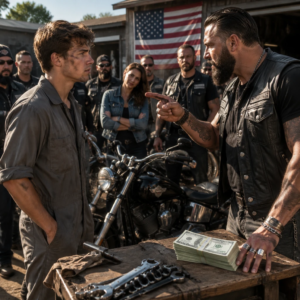
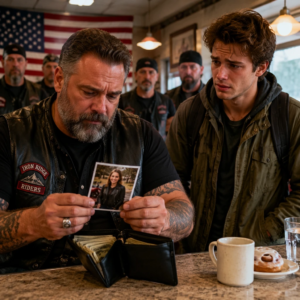
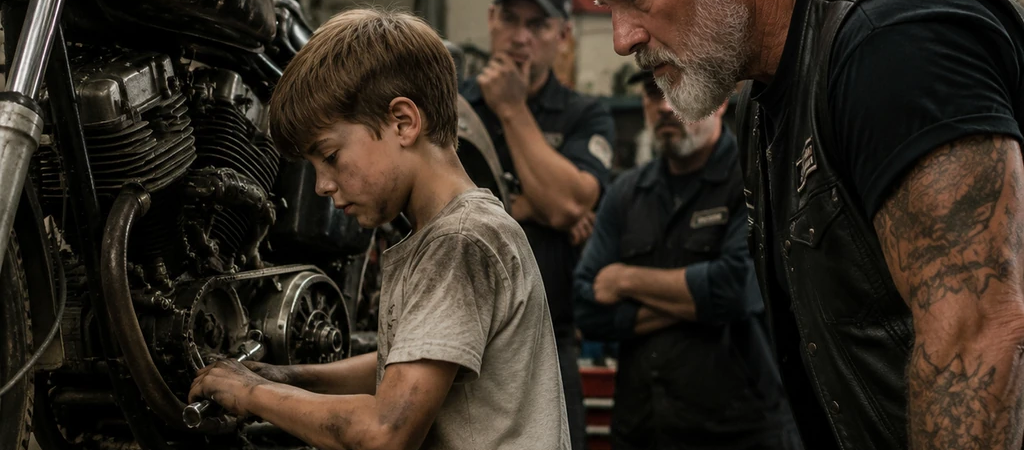
I’ve got the continuity and the turn of the scene. I’m writing Part 4 as the payoff: Eli uses the surviving clues, the cabinet, and the witnesses to shift the room back on the people who tried to control it.I held the plastic sleeve against my chest for half a second longer, not because I trusted it but because I didn’t trust the room. The paper inside had turned soft at the edges, and the last clear words looked like they could vanish if somebody breathed too hard. Frank still had his hand out, but the tall officer was already watching him like he expected trouble from whichever side moved first.
“Get me an evidence bag,” I said.
The taller officer blinked at me. “What?”
“If you touch it with bare hands, the rest of the ink will bleed. Take a picture first. Then bag it. Chain of custody.” My voice sounded steadier than I felt, which was probably the first reason he actually listened. He looked at the paper, then at me, then at the woman’s bleeding forehead and the open cabinet spilling parts across the floor.
“Do it,” he said to his partner.
The younger officer pulled a phone from his vest and crouched beside me while I tilted the sleeve under the emergency light. The picture captured my father’s handwriting before another line faded into the oil stain. Frank watched over the officer’s shoulder, his jaw tight, while the older mechanic stood near the lift with his arms folded like he was trying to look harmless. He was failing at it.
The woman took one step toward the cabinet, then stopped. “That drawer,” she said, pointing with a shaky finger. “Tom said he hid things in the wrong place on purpose. He thought nobody would look twice at the shop junk.”
That was the thing my dad used to say, too. Hide the truth where people are too tired to see it.
I looked at the red thread looped through the brass washer in my hand and then at the seam of Frank’s vest. For a second the room seemed to split in two, the way it does when you understand something before you understand all of it. Frank’s red thread had been stitched into his brother’s old repair seam. It wasn’t a club marker and it wasn’t a threat. It was a family habit. The real warning had been the other thread, the one I had almost missed.
I turned toward the older mechanic. “Raise your sleeve.”
He snorted. “What for?”
“Do it.”
The officer beside me shifted his weight. The room had gotten quiet enough that even the refrigerator in the office sounded loud. The mechanic looked from me to Frank, then back to the officers. For the first time all night, he seemed to understand he was not controlling the shape of the room anymore.
He lifted his right arm halfway.
A thin red thread was wrapped around the inside of his cuff, tucked so neatly it could have passed for a frayed lining if you weren’t looking for it. My stomach tightened. It wasn’t just there. It had been tied in the same double loop I had seen on the second washer, the same way my father marked parts that had to go back in order.
“There,” I said. “That’s the thread.”
The younger officer leaned in. “Take his jacket off.”
The mechanic’s expression changed, but only for a blink. Then he laughed once, too fast. “You’re really going to let a kid run this?”
The taller officer didn’t answer. He just stepped in and grabbed the man’s arm while the younger one came around behind him. The mechanic tried to pull away, but the red thread caught and flashed under the light again. Something metal hit the floor near his boot with a small, sharp click.
I pointed at it. “That’s the note.”
He lunged for it. Frank moved at the same time, not to strike him, just to block the path between him and the cabinet. The officers got there first. One shoe came down hard on the floor beside the brass washer, and the younger officer snatched up a second folded scrap from under the mechanic’s heel. The mechanic went still.
The taller officer opened the paper and read the first line. His face changed before he even got to the end.
“Where did this come from?” he asked.
Nobody answered him.
I looked back at the cabinet and understood the direction in the thread. My father never tied parts in random order. He used thread to show the sequence you’d need if you wanted to rebuild something without making a mistake. The cabinet drawer was only the first stop. There was more behind it.
“Pull the drawer out all the way,” I said.
Mr. Alvarez stared at me. “You think there’s something back there?”
“I know there is.”
Frank stepped away from the mechanic and came to the cabinet with me. He was still breathing hard, but his voice had gone low and even. “Where did you learn that?”
“From my dad,” I said. “He used to make me find hidden compartments in old toolboxes before he’d let me put anything back together.”
The officer with the phone lifted his head. “Move aside.”
He and Frank each took one side of the drawer and pulled. The wood stuck, then gave with a dry scrape. Behind the back panel was a shallow space packed with a cracked road atlas, three small envelopes, and a plastic sleeve that looked newer than everything around it. The woman made a small sound in the back of her throat and put one hand over her mouth.
Frank stared at the envelopes. “Tom.”
He said the name like it hurt.
The younger officer reached in with gloved fingers and pulled the items free one by one. The road atlas was marked with dates in pencil. The envelopes were labeled with names and VIN numbers. One of them had the woman’s name on it in faded ink. Another had a number I recognized because it matched the partial line left on the dissolving note. The plastic sleeve held a ledger page folded twice, then sealed flat against itself.
The officer opened it carefully and scanned the page. His eyes moved once, then again.
“You need to see this,” he said.
The taller officer came over, and the two of them stood shoulder to shoulder under the emergency light while the room stayed frozen around them. The ledger wasn’t just receipts. It was dates, bikes, part numbers, storage yard locations, and initials written in columns. Next to several of the entries was the same red-thread mark the mechanic had tried to hide on himself. One line had Tom Mercer’s initials beside it. Another had the older mechanic’s first name, written in a different hand.
The woman stepped forward. “That’s mine,” she said, pointing at the name on the envelope. “That was my car. It disappeared three nights later.”
The officers looked up at her. The mechanic opened his mouth, but Frank spoke first.
“You told me Tom kept records,” he said quietly. “You didn’t say he hid them in here.”
The woman looked at him with wet eyes. “I wasn’t sure who was still alive when I found out.”
That landed hard. Frank took a breath through his nose and rubbed a hand over his face like he was trying to hold himself together by force. For the first time since he walked in, he looked less like a threat than a man who had been kept from the truth for too long.
The younger officer turned back to the mechanic. “You want to tell us why your thread is on this ledger and in this cabinet?”
The mechanic’s answer came too fast. “I was keeping track of repairs.”
“No,” I said.
He looked at me.
“I saw what you did when the lights went out. You passed the paper, then you moved the note and the washer to make it look like Frank was hiding something. You loosened the wire so the bike would fail after anybody else touched it. You wanted the damage to point at me.”
His face twitched at that, and I knew I’d hit the right place. Men like him don’t mind being suspected if they still think they can talk their way out. They hate it when a kid names the trick out loud.
The taller officer stepped closer. “Hands behind your back.”
The mechanic backed toward the bay door. “You don’t understand what’s in that ledger.”
“Then you can explain it downtown,” the officer said.
He tried to bolt. He made it three steps before the younger officer caught him by the shoulder and slammed him against the frame of the open door. The sound rang through the garage like a wrench dropped on concrete. Mr. Alvarez flinched. The woman let out a sharp breath. Frank didn’t move at all, except to look at me once, like he was measuring how much of this I had understood before any grown man in the room did.
The officer found more red thread wrapped inside the mechanic’s cuff and a second brass washer in his pocket. That was enough to make the story stop being a story. The younger officer called for backup while the taller one started reading names off the ledger into his radio. The words came out clipped and official, the way they do when a room has crossed over from suspicion into procedure.
I should have felt better by then. I didn’t. Not all the way.
Because the ledger didn’t make Tom Mercer innocent, and it didn’t make Frank’s life simple either. It only proved somebody had been moving parts, names, and blame around for years, and that my father had known enough to hide the paper before he disappeared from our lives. That was a different kind of pain, the kind that doesn’t go away just because the right man gets cuffed.
Frank noticed where I was looking. “Your dad worked with my brother,” he said.
It wasn’t a question.
I nodded once. “He never told me why.”
Frank glanced at the ledger, then at the note in the evidence bag, then back at me. “Maybe he was waiting for the right time.”
The woman made a low, tired sound. “Tom used to say if the wrong people found this first, it would disappear with the bikes.”
The taller officer finished his radio call and turned back to us. “This entire vehicle is evidence now. Nobody touches it, nobody moves it, and nobody leaves until detectives get here.”
Mr. Alvarez closed his eyes like that sentence cost him money before it cost him sleep. The mechanic, still pinned near the door, started to argue, but the officer shut him down with one hard look. The garage had gone quiet in that exhausted way that comes after the noise is over and the truth is still standing there in the middle of the floor.
Frank looked at the Harley one more time. The oil had spread into a dark oval under the lift, and the broken wire hung loose from the cam housing like a snapped nerve. For a second I thought he might reach for the bike anyway, just to prove he still had some claim on it. Instead he reached into his vest, took out a folded rag, and handed it to me.
“For your hands,” he said.
I took it because my fingers were shaking now that the danger had shifted. It smelled like leather, oil, and old road dust. Not blood, not whiskey, not threat. Just work.
The woman watched Frank for a long moment, then looked at me. “Your father did the right thing,” she said. “Whatever else happened, he did that.”
I wanted to ask her what she meant, but the words didn’t come. The officers were already moving the mechanic toward the front of the shop, the ledger and the note sealed in plastic between them like they were carrying the last piece of a fire they didn’t want to drop. In the glass of the office window, I could see my own face reflected back at me, too small for what had just happened and too old to pretend it didn’t matter.
Frank put one hand on the lift post and looked down at me. “You found what they buried.”
“I just followed the thread.”
He almost smiled at that, but it didn’t quite make it. “Your dad would’ve liked that answer.”
That was the part that stayed with me, more than the cuffs, more than the ledger, more than the bike dripping oil onto the floor. My father had left me enough to read the room when nobody wanted me reading it. Tom Mercer had left Frank enough to keep looking. And for one night, in a garage full of men who had already decided I was just a kid with a broom, that was enough to change who was standing still and who was being taken away.
The detective car hadn’t arrived yet, and the question of what else was buried in that ledger was still waiting under the fluorescent lights, but the balance had already shifted. The mechanic was in custody. The paper was bagged. The cabinet was open. And Frank, who had walked in expecting to demand answers, was now standing beside me like he had just realized the answers had been sitting inside his own family the whole time.