
Part 4
The divorce proceedings moved faster than anyone expected, mostly because Bradley’s attorneys realized within the first hearing that a forensic paper trail this clean left them nothing to negotiate with.
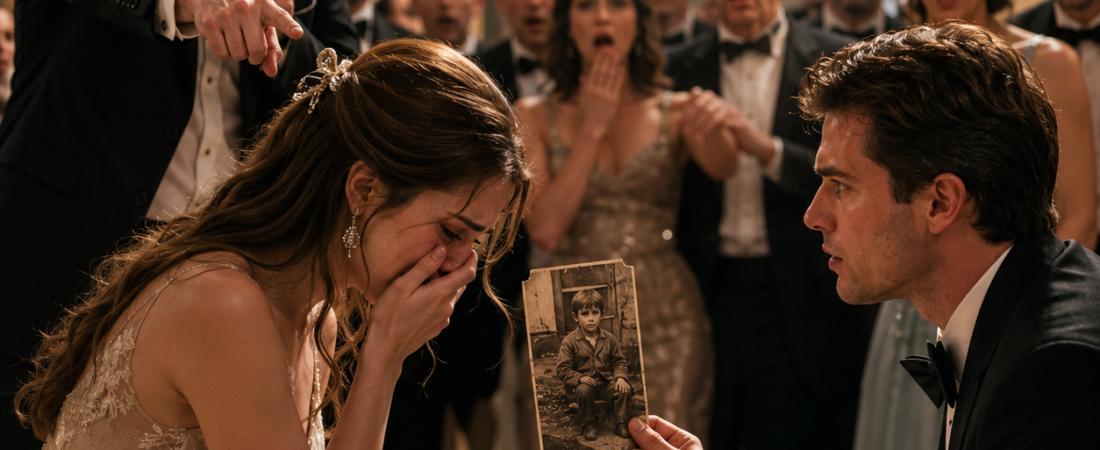
Bradley lost the house. He lost access to the trust entirely. He lost, perhaps most painfully for a man who had spent a decade curating his reputation, the quiet respect of nearly everyone who had been in that ballroom the night Julian Marsh stood up with a photograph and a number.
His golf partners stopped returning his calls within a month. The country club quietly declined to renew his membership, citing an unrelated bylaw nobody had enforced in a decade. Constance, who had spent nine years treating Eleanor like an unwelcome guest at her own dinner table, called twice in the weeks after the divorce filing, and Eleanor let both calls go to voicemail without a flicker of guilt.
The tabloids ran with “Ten Dollar Wife” for exactly one news cycle before Eleanor’s own statement reframed the story entirely: not as a scandal about a bidding war, but as an account of a marriage built on quiet financial abuse that had simply, finally, been dragged into the light. She gave one interview, to a reporter she trusted, and refused every offer after that, unwilling to let her own life become content for strangers to consume.
She didn’t take Julian’s money. Not directly. She’d made that clear the second week, sitting across from him in his office with Priya’s full report between them.
“I don’t want a payout,” she told him. “I want a job.”
Julian raised an eyebrow. “You want to work for me?”
“I want to build something,” she said. “I spent nine years being told I wasn’t good for anything except hosting parties I didn’t even get credit for planning well. I’d like to find out if that was ever true.”
It wasn’t.
Within a year, Eleanor had built out a philanthropic arm of Julian’s company from a two-person office into a fully staffed foundation, funding meal programs in exactly the kind of neighborhoods she’d grown up volunteering in before marriage swallowed that version of her life whole. She named the flagship program after a diner that had closed in 2009, the only tribute she ever asked for.
The first year was harder than the gala itself in some ways, quieter but no less demanding. She learned budgeting software at thirty-four the way most people learn it at twenty-two, staying late with a junior analyst named Theo who never once made her feel foolish for asking a basic question twice. She sat through board meetings where men who’d known her only as “Bradley Sinclair’s wife” for nearly a decade had to slowly, visibly recalibrate how to address her directly instead of through him.
She made mistakes. She approved a grant to an organization that turned out to be poorly run, and spent three humiliating weeks unwinding the funding once the truth came out. She learned, the hard way, the difference between generosity and due diligence, and rebuilt the foundation’s vetting process from scratch afterward, refusing to let one bad decision define the whole effort.
There was a particular Tuesday, eight months into the job, when Eleanor sat in a meeting with three seasoned nonprofit directors twice her age, listening to them debate an allocation strategy she genuinely didn’t understand yet, and felt the old, familiar urge to simply nod along rather than admit confusion. She caught herself mid-nod and asked the question anyway. Nobody in the room laughed at her. Nobody made her feel small for not already knowing. It was such a foreign experience that she nearly cried in the elevator afterward, overwhelmed by how normal basic respect was supposed to feel.
Theo became something like a friend over that first year, not romantically, just steadily, the kind of colleague who left coffee on her desk on the mornings she’d clearly slept badly and never once mentioned it. He’d grown up in foster care himself, bouncing between six placements before aging out at eighteen, and he understood instinctively why the diner meal program mattered to Eleanor in a way that went beyond spreadsheets and quarterly reports.
“You built something that would have actually helped me,” he told her once, the two of them the last ones left in the office on a Friday night. “Not charity. Just somebody noticing before it got to be an emergency.”
By the end of the second year, the foundation had expanded from the original diner-based meal program into six cities, partnering with local restaurants willing to quietly set aside a portion of their kitchen output for kids and families who needed it, no paperwork required, no humiliating means test at the door. Eleanor insisted on that detail specifically, remembering exactly how it had felt, decades earlier, to hand a hungry kid food without ever once asking him to prove he deserved it.
Julian never brought up the ballroom again unless she did first. He never treated the million-dollar bid as leverage over anything, never expected gratitude shaped like romance, never pushed past the boundaries she set as she rebuilt a life that finally belonged only to her.
It took two more years before either of them said anything about what had grown quietly between them in the meantime, late nights reviewing grant proposals, long calls that outlasted their reasons for starting, a comfort neither one had been in a hurry to name.
There was a specific evening, nearly eighteen months in, when Eleanor caught herself staying an extra hour at the office simply because Julian was still there, no work left to justify it, both of them pretending the paperwork in front of them still needed attention. Neither said anything about it that night. She drove home a little too fast, unsettled by how much she hadn’t wanted to leave.
Julian, for his part, spent those same two years deliberately not pushing, aware of exactly how much Eleanor had just spent nine years learning to distrust affection that came with expectations attached. He asked about her day. He remembered small details, the name of her childhood dog, the specific way she took her coffee depending on how stressful the week had been. He never once made her feel like his patience was a debt she owed interest on.
There was a Thursday, close to the two-year mark, when Eleanor showed up to the office genuinely furious about a grant proposal that had fallen through after months of work, venting for a full twenty minutes without editing herself the way she’d once edited every emotion in front of Bradley. Julian just listened, offered one useful suggestion near the end, and otherwise let her be as unpolished and angry as she needed to be. Driving home that night, she realized she couldn’t remember the last time she’d been fully herself in front of another person without bracing for some kind of correction afterward.
That was the night she started letting herself consider what she’d been avoiding considering.
When Julian finally asked her to dinner, an actual date, nothing to do with the foundation or debts owed or photographs from twenty years ago, Eleanor said yes on one condition.
“No bidding,” she said. “No grand gestures with an audience. Just dinner.”
He laughed, the first real laugh she’d heard from him without a room full of witnesses attached to it.
“Just dinner,” he agreed.
Their first date was almost aggressively ordinary by design, a small Italian place two blocks from the foundation’s office, no reservation under either of their names, no one recognizing either of them from a headline that had already faded from most people’s memory. They talked for three hours about nothing that mattered and everything that did, and neither one reached for a grand gesture the entire evening.
Julian told her, for the first time in real detail, what the two years after the diner had actually looked like, the group home he’d cycled through, the teacher who’d noticed him falling behind and pushed the school to test him for a scholarship program, the strange, disorienting climb from a kid with nothing to a young man suddenly responsible for hundreds of employees. He’d never told anyone the full version before, not even his closest business partners, and Eleanor understood, listening to him, that the ballroom hadn’t been the end of a debt he was settling. It had been the beginning of him finally being willing to be fully known by someone.
Eleanor, in turn, told him things she’d never said out loud to anyone besides Margot, about the specific loneliness of being present at hundreds of events while feeling invisible at all of them, about how she’d stopped, somewhere around year four of her marriage, expecting anyone to ask what she actually wanted for herself.
Margot, informed the next morning over the phone, made Eleanor repeat the word “dinner” three separate times before she believed it wasn’t code for something more dramatic.
“Just dinner,” Eleanor confirmed, laughing for what felt like the first time in years without any weight attached to it.
“After a million-dollar bid and a public divorce, forgive me for needing clarification,” Margot said. “You two have a track record of dramatic entrances.”
“Not this time,” Eleanor said. “This time it was just spaghetti and bad lighting and neither of us wanting the check to arrive.”
A year later, at their wedding, small and unbothered by any press coverage at all, held in Margot’s backyard with exactly thirty-one guests and a caterer who insisted on bringing grilled cheese sandwiches as an appetizer once Eleanor explained why, Julian gave a short toast that mentioned neither the ballroom nor the money.
Theo attended, seated near the front, having become close enough to both of them over the years that his absence would have felt wrong. Priya came too, no longer just the forensic accountant who’d unraveled Bradley’s finances, but someone Eleanor now considered a genuine friend, the two of them having grown close over years of collaborating on the foundation’s financial oversight.
Margot cried through the entire ceremony, the same sister who had once pulled a shattered woman through her front door without asking a single question, now watching that same woman marry someone who’d never once asked her to be smaller than she actually was.
The backyard was strung with simple string lights rather than anything resembling the chandeliers of the old ballroom. Eleanor wore a dress she’d chosen entirely on her own, without anyone else’s measurements or expectations shaping the fit. When she walked toward Julian across the small stretch of lawn, there was no veil thick enough to hide behind, no borrowed identity, no stranger’s happiness she was quietly wearing instead of her own.
He simply raised his glass to the woman who’d once given away half her lunch to a stranger’s kid without asking for anything back, and said the only line that mattered:
“I spent twenty years trying to find a way to say thank you. It turned out the only thing worth giving her was exactly what she’d given me first. Somebody who saw her, and stayed.”
Eleanor kept the photograph. Not framed on a wall for guests to admire, but tucked inside a drawer in her office desk, close enough to reach whenever she needed reminding that the smallest kindness a person offers without expecting anything back can, given enough time, find its way home.
Sometimes, on slow afternoons at the foundation, she took it out and studied the two figures in the frame: a hungry boy on a diner step, and a girl who hadn’t yet learned to make herself small for anyone. She thought, more often than she expected to, about how strange it was that the version of herself she’d fought hardest to reclaim was the exact same one who’d once had nothing to prove and nothing to protect, just a paper bag and a kid who needed it more than she needed the second half of her lunch.
Bradley remarried eventually, a much younger woman from a family with considerably less money to protect, and Eleanor heard about it secondhand from someone at the old country club who still, out of habit, thought she’d want to know. She found she genuinely didn’t. Whatever anger she’d once carried for him had long since been spent, replaced by something closer to distant, unbothered indifference, the kind reserved for a chapter that had simply ended.
The diner itself, the one that had closed back in 2009, reopened three years into the foundation’s work, purchased quietly through one of Eleanor’s grants and restored under its original name, run now by a nonprofit that trained young people aging out of foster care in restaurant management. Julian cut the ribbon. Eleanor stood beside him, and for once, neither of them minded the small crowd of cameras that showed up for that particular afternoon.
It felt, finally, like the right kind of attention. The kind that came from having built something, rather than from having survived something.